If you are questioning your pornography use, you deserve a fair assessment. Perhaps you find it difficult to stop at the time you planned for the evening. Perhaps your main experience is a guilty conscience. Looking more closely at these experiences can help you understand what kind of support may suit you.
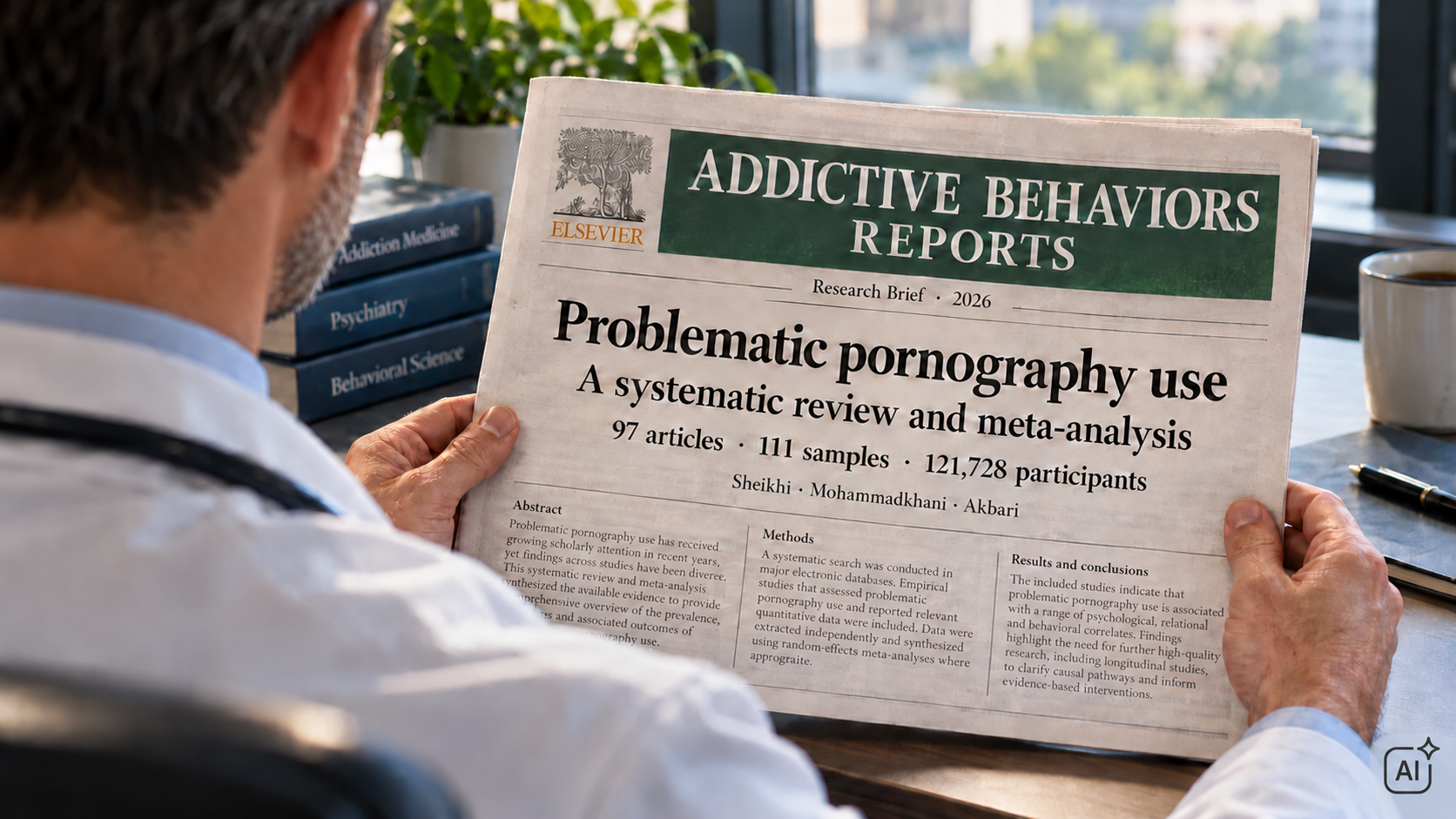
Published online in Addictive Behaviors Reports on 26 August 2026, the study brings together 97 publications with 111 independent samples and a total of 121,728 participants. This figure describes the combined sample size, not the number of people diagnosed with a disorder. [1]
Problematic pornography use was associated with strong cravings, difficulties managing emotions, depressive symptoms and loneliness. Sexual shame and moral disapproval were also associated with it. The strength of these associations varied considerably. [1]
Most of the studies measured these characteristics at the same point in time. It therefore remains unclear which came first and what may be a cause or a consequence. The findings do not, for example, establish that pornography use causes depression. [1]
The researchers also examined the questionnaires used. Some primarily measure difficulties controlling behaviour; others give greater weight to shame or internal conflicts. These differences could explain some of the variation in the findings. This classification does not describe clearly separate groups of people. [1]
For a personal assessment, what happens in everyday life matters. Frequent use or a strong sexual interest alone does not establish a disorder. Persistent difficulties controlling behaviour, repeated unsuccessful attempts to cut back and continuing despite harmful consequences deserve closer attention. These consequences may include neglected responsibilities or significant relationship problems. A clinical assessment considers duration, distress and impairment. [2]
Shame also deserves attention, but it is not, by itself, evidence of a disorder. People who disapprove of pornography for personal, cultural or religious reasons may find their own use distressing. Distress based entirely on moral disapproval is not sufficient for a diagnosis of compulsive sexual behaviour disorder. [2]
This does not mean dismissing those feelings. Instead, a helpful conversation can begin by describing what is troubling you as specifically as possible: Which situations would I like to change? What consequences do I actually notice? What expectations do I place on myself? Personal values deserve a place in that conversation, alongside difficulties keeping to your own limits.
The same careful approach is useful in self-assessment. Individual answers should not be turned too quickly into a label. A questionnaire should explain which experiences it measures and how its result should be understood. You do not have to consider yourself ill before choosing to change your habits.
For us at PornLess and PornoPause, this is an important guiding principle: we want to support adults in reflecting on their pornography use, reducing it or taking a deliberate break. Loss of control and effects on everyday life should be part of that conversation. Fear, shame and guilt are not sales arguments for us.
The meta-analysis provides scientific background for this approach. However, it does not establish the reliability of our specific self-check or the effectiveness of our programs. A self-check offers guidance and does not replace a professional diagnosis. If your use significantly affects your daily life or causes substantial distress, speaking with a psychotherapist or a professional specialising in sexual medicine may help you make sense of it.
Would you like to take a closer look at your use? The free self-check on PornLess can be a starting point for reflecting on your habits.