Disclosure: As the founder of the digital self-help services PornoPause and PornLess, I work on issues surrounding pornography use and prevention. This is the perspective from which I comment on the decision.
What the court decided
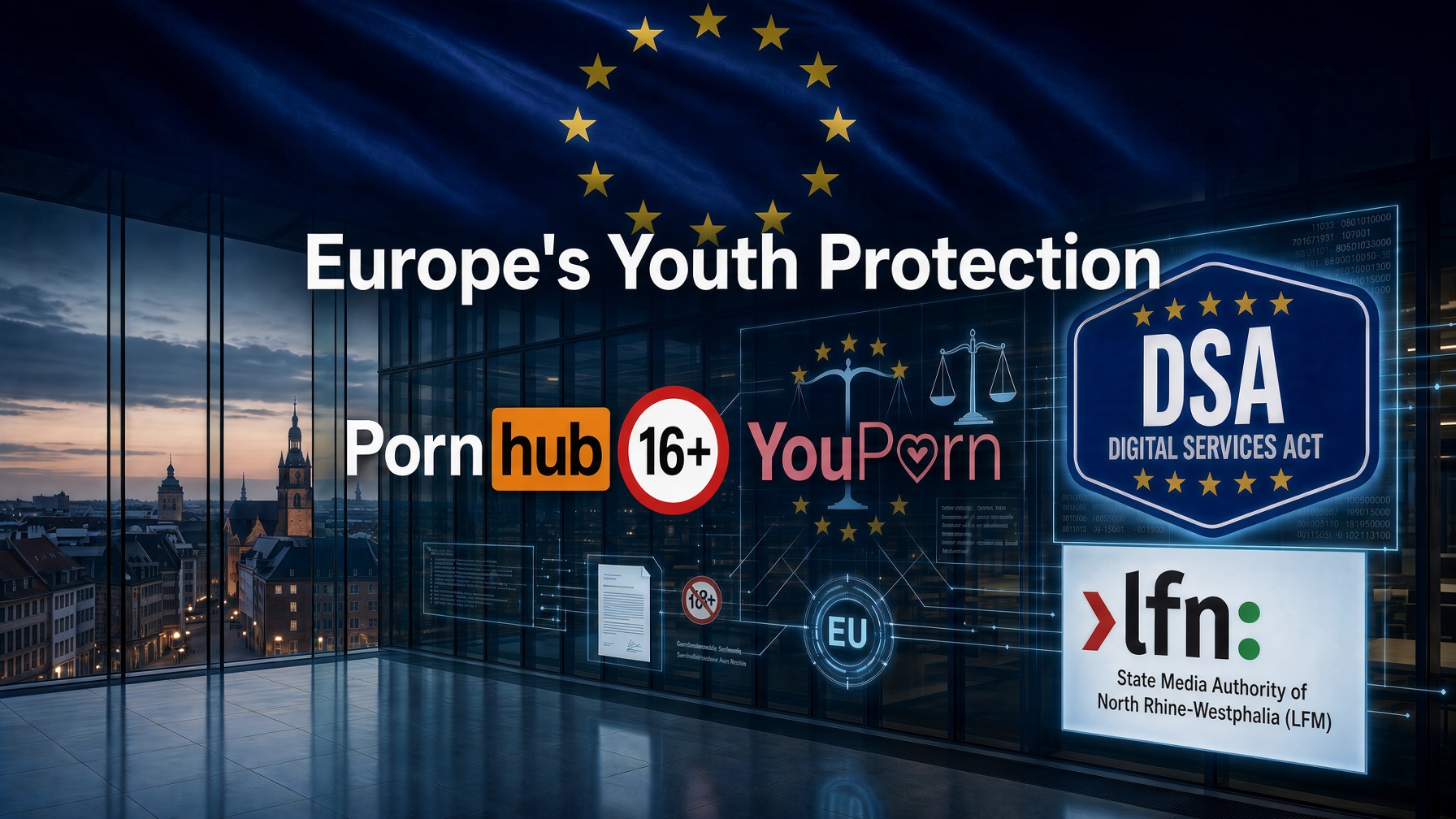
On 9 October 2026, the Higher Administrative Court of North Rhine-Westphalia in Münster ruled in two interim proceedings that a German internet service provider does not have to block Pornhub and YouPorn for the time being. The appeals brought by the NRW Media Authority were unsuccessful. The case numbers are 13 B 1351/25 and 13 B 1359/25. These interim rulings do not constitute a final decision in the main proceedings. [1, 2]
The background is a dispute spanning several years over the lack of effective age verification. The media authority initially took action against the Cyprus-based operator and later issued blocking orders to German internet service providers. [1]
The court identified obstacles under EU law, particularly the country-of-origin principle and the enforcement rules of the Digital Services Act (DSA). For YouPorn, the court points primarily to the authorities in Cyprus. For Pornhub, its designation as a very large online platform places the relevant enforcement responsibility with the European Commission. [2, 3]
The decision does not give these platforms permission to make pornography accessible to minors. It concerns the legal requirements for the blocking orders at issue. [3]
🇪🇺 Why “the EU must act” is not enough
The European Commission had already opened proceedings against Pornhub in May 2025 over possible failures to protect minors. It would therefore be wrong to suggest that nothing is happening at European level. [2]
Nor can political pressure shorten a complex regulatory investigation at will. Authorities must investigate allegations, provide legal grounds for measures and respect the procedural rights of the companies concerned. Platforms are also entitled to judicial protection.
A demand for immediate sanctions therefore falls short. Equally, the complexity of a case should not be used to explain or justify every delay.
In my view, the public debate needs more specific questions: Which protective measures are being examined? Which procedural steps have been completed and which remain? What interim measures could legally be considered? How will authorities verify that platforms actually improve their safeguards?
Transparent progress reports would help distinguish necessary procedural time from avoidable delay. A realistic expectation of DSA enforcement is that proceedings make demonstrable progress and legally sound measures become effective.
🔐 Age verification must also protect privacy
Anyone calling for effective age verification must consider how it is designed.
Information processed in connection with pornography services is particularly sensitive. Verification procedures should therefore require as little personal data as possible and avoid unnecessary links between identity and browsing behaviour.
The key criteria are effectiveness, data minimisation and practical usability. A solution must meet all three.
🧠 What prevention can contribute
While regulators and courts consider how to enforce protection duties, another social responsibility remains: people need knowledge, guidance and someone they can turn to.
This includes age-appropriate conversations about sexuality, consent, body image and the staged nature of pornography. Adults who find their own use distressing need opportunities for self-reflection and, where necessary, professional support.
Legal access restrictions and prevention serve different purposes. Education does not relieve platforms of their protection duties. Technical controls, in turn, cannot replace media literacy or open conversations.
Responsibility must be open to scrutiny
The Münster decision illustrates how demanding it is to enforce child protection within the European single market. Due process takes time. Its effectiveness must also be judged by whether protection duties are actually implemented.
My expectation of the responsible authorities is therefore to make procedural progress transparent, examine legally available safeguards and consistently monitor their impact.
And my expectation of platforms is that responsibility towards minors must be demonstrated through effective safeguards.
How can we effectively protect minors while safeguarding the privacy of adult users?